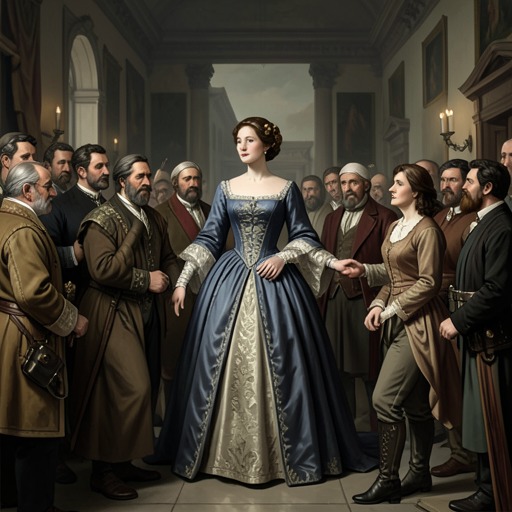
Doña Catita
My Tender MatadorDoña Catita is a valued client whose commission places the Queen of the Corner’s private life in contact with the polished domestic world of Chile’s military elite. The wife of General Ortúzar, she expects a custom-embroidered tablecloth for a September 11 dinner, and her importance to the Queen is evident in the latter’s anxious excuses, painstaking work, and reluctance to surrender the finished piece.## Identity and Social PositionDoña Catita is described as the Queen’s oldest and most distinguished client. The Queen regards her as a genuine lady who treats her well and pays generously, and she values not only the income but the recognition of being treated as an artist. Catita’s place among the generals’ wives gives her commission a public and ceremonial setting: the cloth is intended for a dinner with her husband’s friends, with the date chosen for September 11.## The Delayed CommissionThe Queen has completed the tablecloth but has not delivered it on time. Catita calls to ask where she has been and reminds her that the cloth was ordered more than a month earlier. The Queen knows the real delay: she took the work on a picnic, where Carlos accidentally spilled chicken and soda on it. She now has to wash it with bleach, starch it, and iron it before handing it over. The ordinary practical work of salvaging the cloth is inseparable from the Queen’s emotional reluctance to part with it, because the picnic was a happy time with Carlos.## Excuses and the Queen’s Private LifeRather than tell Catita that a man is responsible for the delay, the Queen invents an elaborate family reunion. She claims that a radio program led her to relatives she never knew she had and that she has been busy visiting and helping them. The story reverses her longstanding loneliness: she presents herself as someone who has suddenly acquired parents, siblings, cousins, nieces, nephews, and other kin. Catita questions the account, pointing out that the Queen had previously said she had no family, but the Queen maintains the fiction and promises to bring the finished cloth that afternoon. Her deception shows the distance between a client relationship that is warm and respectful and the intimate truth she does not wish to disclose.## Design, Taste, and CeremonyThe Queen assures Catita that the finished work is beautiful, with golden birds and little angels embroidered in the iridescent imported thread Catita likes. She has, however, omitted the Chilean coat of arms with crossed swords that Catita requested for the head of the table. The Queen calls the emblem too showy and compares its effect to something suitable for a roadside tavern; she expects Catita, whom she considers a woman of exquisite taste, to see the design as she does once she sees the cloth. Catita is upset because the emblem mattered to her, and the Queen recognizes that the disagreement could have consequences, yet still defends her artistic judgment. The missed delivery date and disputed emblem make the cloth more than a piece of commissioned needlework: it is also an object of taste and a symbol for a formal gathering of military families.## A Connection Across Social WorldsIn the Queen’s account, Catita’s refinement is expressed through her manner and appearance, including her grayish-violet hair and blue eyes. She welcomes the Queen to wait in the kitchen when friends are present, but the Queen’s admiration does not erase the difference between client and worker: she must explain herself, repair the soiled cloth, and meet the expectations attached to the commission. At the same time, Catita’s good treatment and payment distinguish her from a merely demanding customer. The Queen is distressed at giving up the cloth, but resolves to deliver it around six after buying detergent and bleach.## Catita in the Military HouseholdCatita also appears in Augusto Pinochet’s domestic life under the names Cata and Catita Ortúzar. In a telephone conversation with Lucy, she invites the couple to dinner on September 11. Lucy says she is unsure whether they can attend because of their many commitments, and reports that Catita is depressed because the custom tablecloth she ordered may not be ready for the date. The two accounts establish the commission’s significance from both sides: the Queen experiences it as a difficult obligation bound up with Carlos, while Catita regards it as a necessary part of a planned dinner among the generals’ wives. Catita is thus a point of contact between the Queen’s precarious, emotionally charged work and the regime’s formal social calendar.